
Google Ads is changing faster than most advertisers can keep up with.
Jackson Blackledge, who runs Google and YouTube ads for ecommerce brands, put it bluntly in a post this week. We are in the middle of four massive shifts, and the brands that move early will make millions. If you don't move, the market will move you.
I agree with him. But there's a part of this story that most ad people skip.
Every one of these shifts puts more weight on your website. Not your bid. Not your keyword list. The page people land on.
The Quick Version
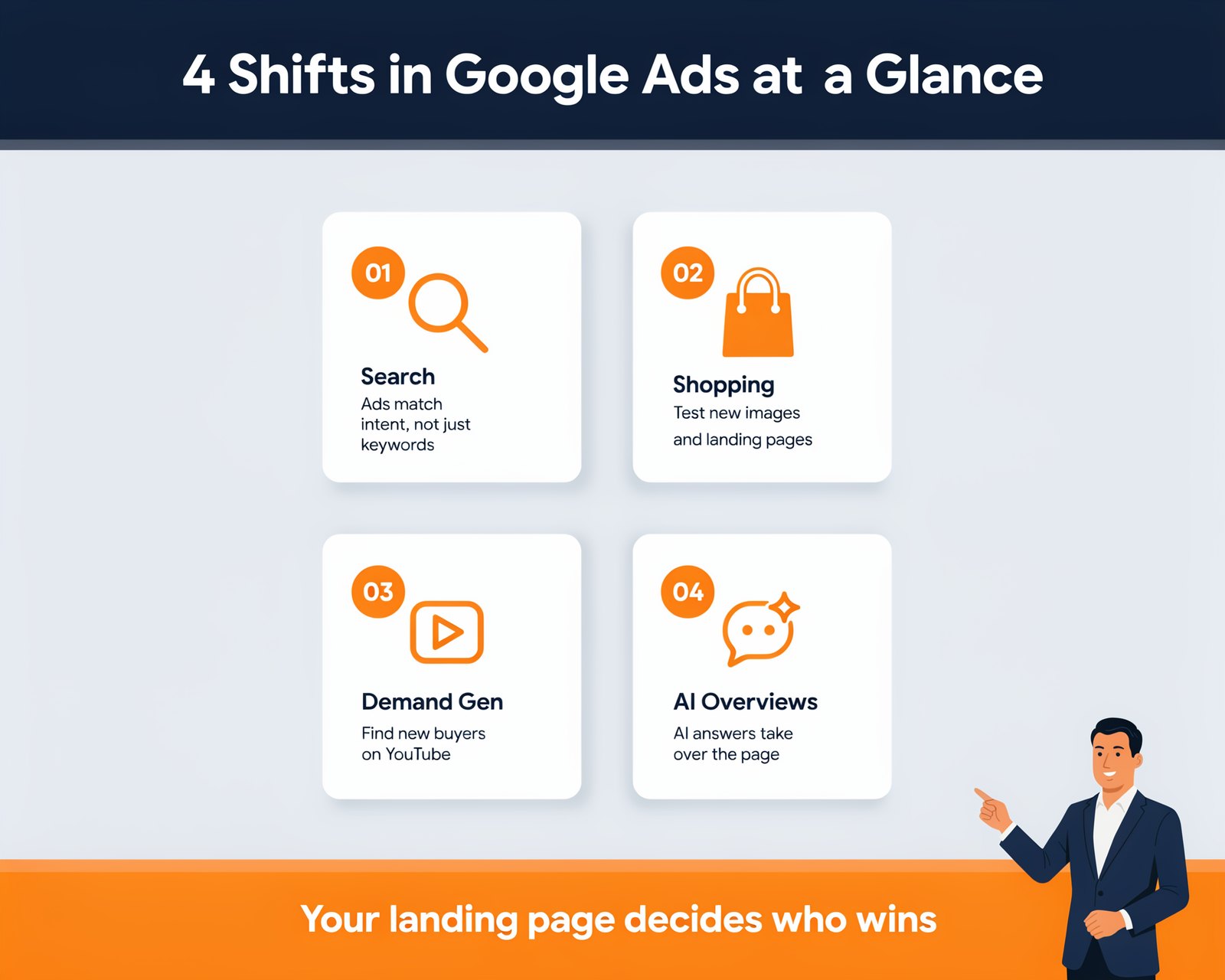
Here are the four shifts in one line each.
- Search now matches your ads to the meaning behind longer questions, not just your keyword list.
- Shopping lets you test different images and different landing pages for different buyers.
- Demand Gen has become a real way to find brand new customers on YouTube and Discover.
- AI Overviews and AI Mode are taking up more of the search page, and more of the traffic.
Let's go through them one at a time.
1. Google Search Is Reading Intent, Not Just Keywords
People don't type two-word searches anymore.
They ask long, specific questions. And they ask different questions at different stages of buying.
Google has leaned into this. Its AI Max for Search campaigns look at the meaning of a search and can show your ad for searches that never appeared on your keyword list. With the right settings switched on, it can also rewrite your ad text and pick which page on your site to send people to.
Think about what that means.
Google is now choosing landing pages from your site. If the page it picks is thin, slow or confusing, you pay for the click and lose the sale.
Jackson makes another point that I love. A lot of advertisers think Search only works for branded and ready-to-buy traffic. That's not true anymore. Search can reach people at every stage.
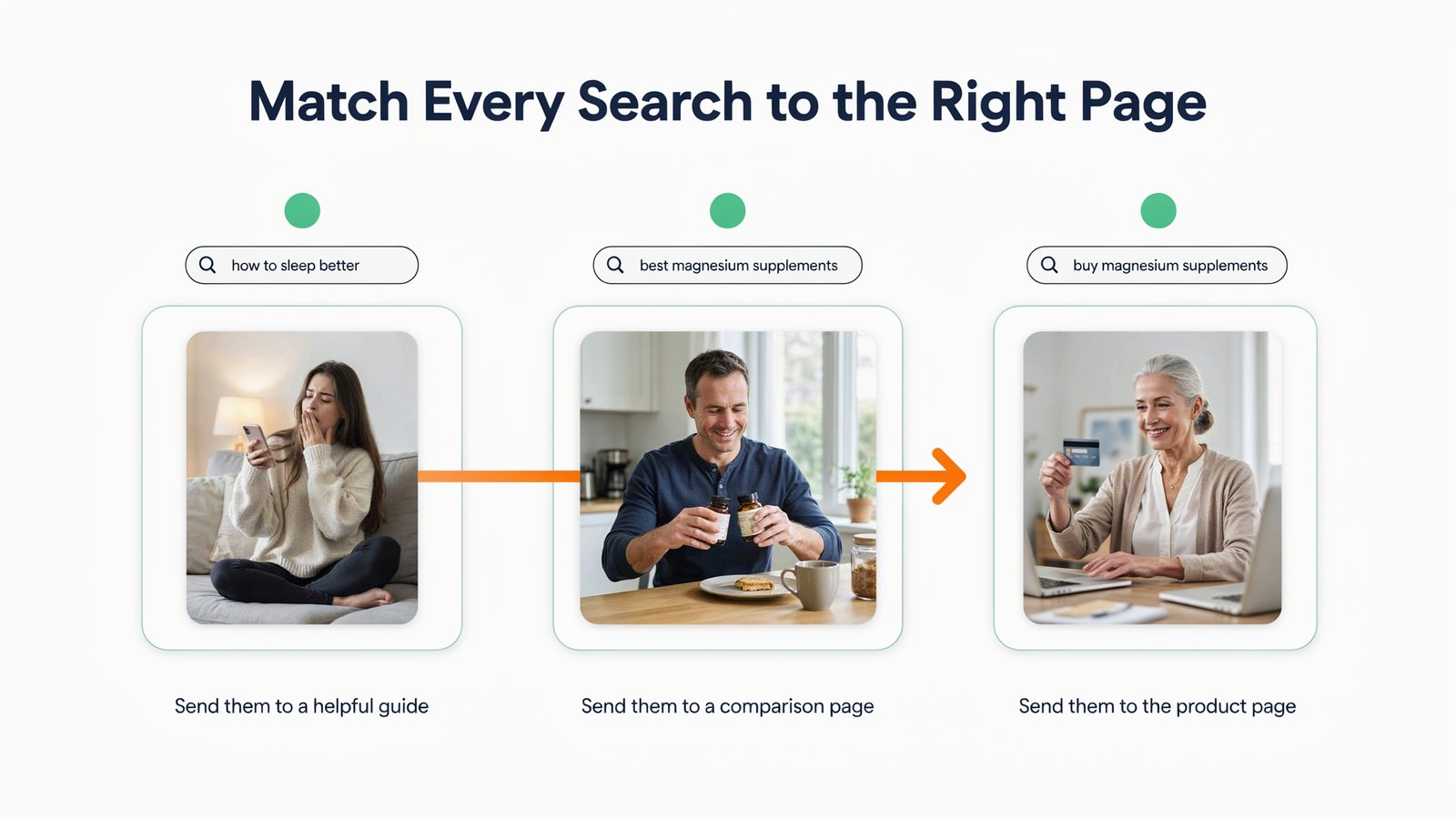
Say you sell a sleep supplement.
- Someone searching "how to sleep better" is learning. Send them to a helpful article that explains the problem.
- Someone searching "best magnesium supplements" is comparing. Send them to a comparison page.
- Someone searching "buy magnesium supplements" is ready. Send them to the product page.
Three searches. Three different pages.
Most businesses send all three people to the same product page. And then they wonder why Search "doesn't work" for prospecting.
What to do about it
Build pages for each stage of intent. Then make sure each page clearly says what it's about, in the title, the headings and the copy, so Google matches it to the right searches.
2. Google Shopping Lets You Test Pages, Not Just Products
Shopping used to be simple. Product photo, price, product page.
Now you have a lot more room to play.
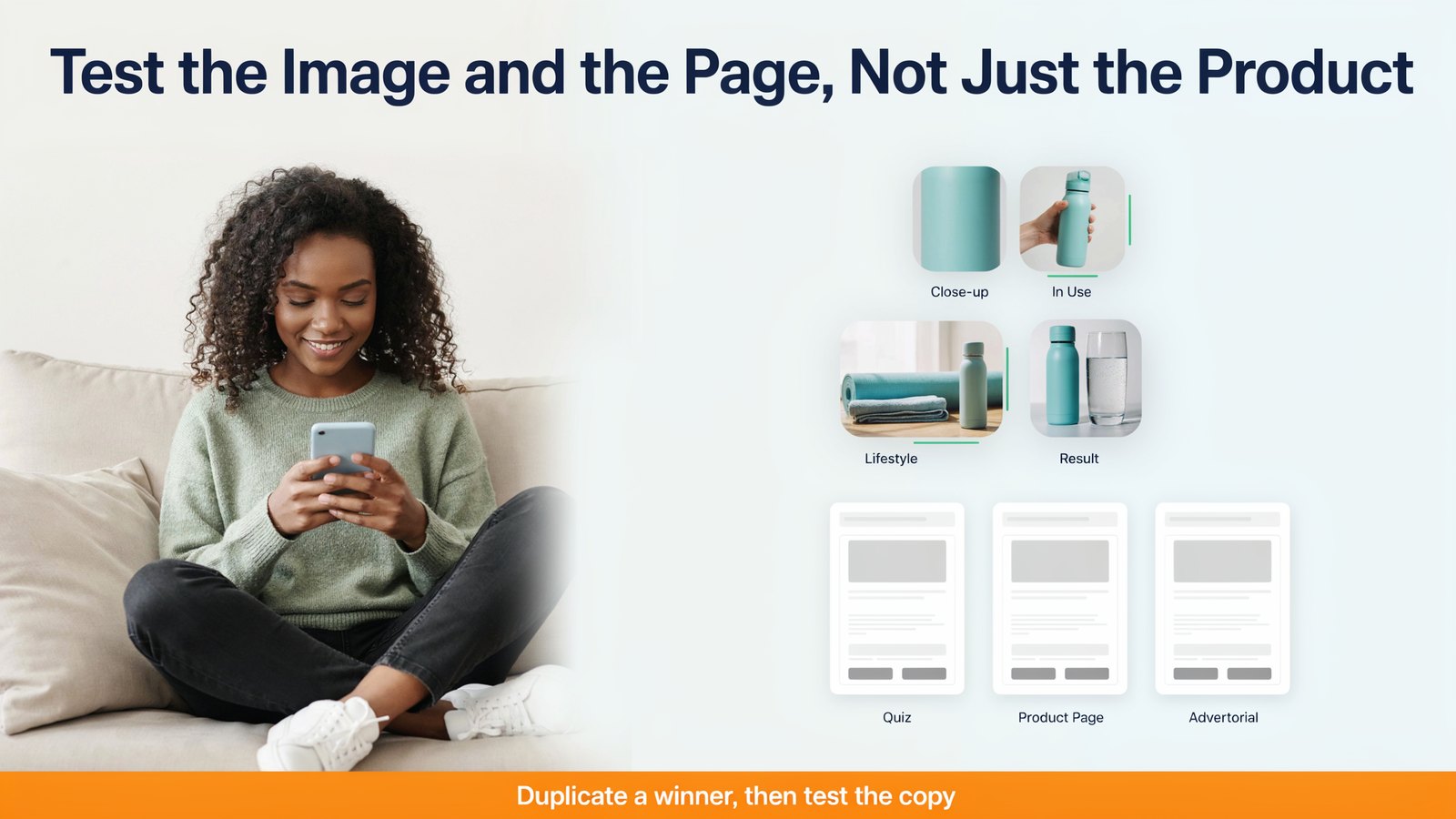
You can test different kinds of images in the Shopping carousel. Close-ups. The product in use. Different people using it. Before and after shots, where that's allowed. Images built around the result someone wants.
And the click doesn't have to go to a standard product page.
You can send people to a short quiz that recommends a product. Or a product page with an education section on top. Or an advertorial that explains the problem first.
Why does this matter? Because a first-time buyer needs more convincing than a repeat buyer. A cold shopper wants proof, answers and reviews before they feel safe buying.
Jackson also gives a smart warning here. Don't swap out a listing that's already selling. Duplicate it and test the new image or page on the copy, so the original keeps making money.
What to do about it
Every new test means a new page or a new version of a page. More pages means more chances for broken links, missing images, duplicate titles and pages that load slowly on a phone.
Test boldly. But check every page before you put money behind it.
3. Demand Gen Is Finding Real New Customers
For years, if you wanted to find cold customers at scale, you went to Meta.
That's changing.
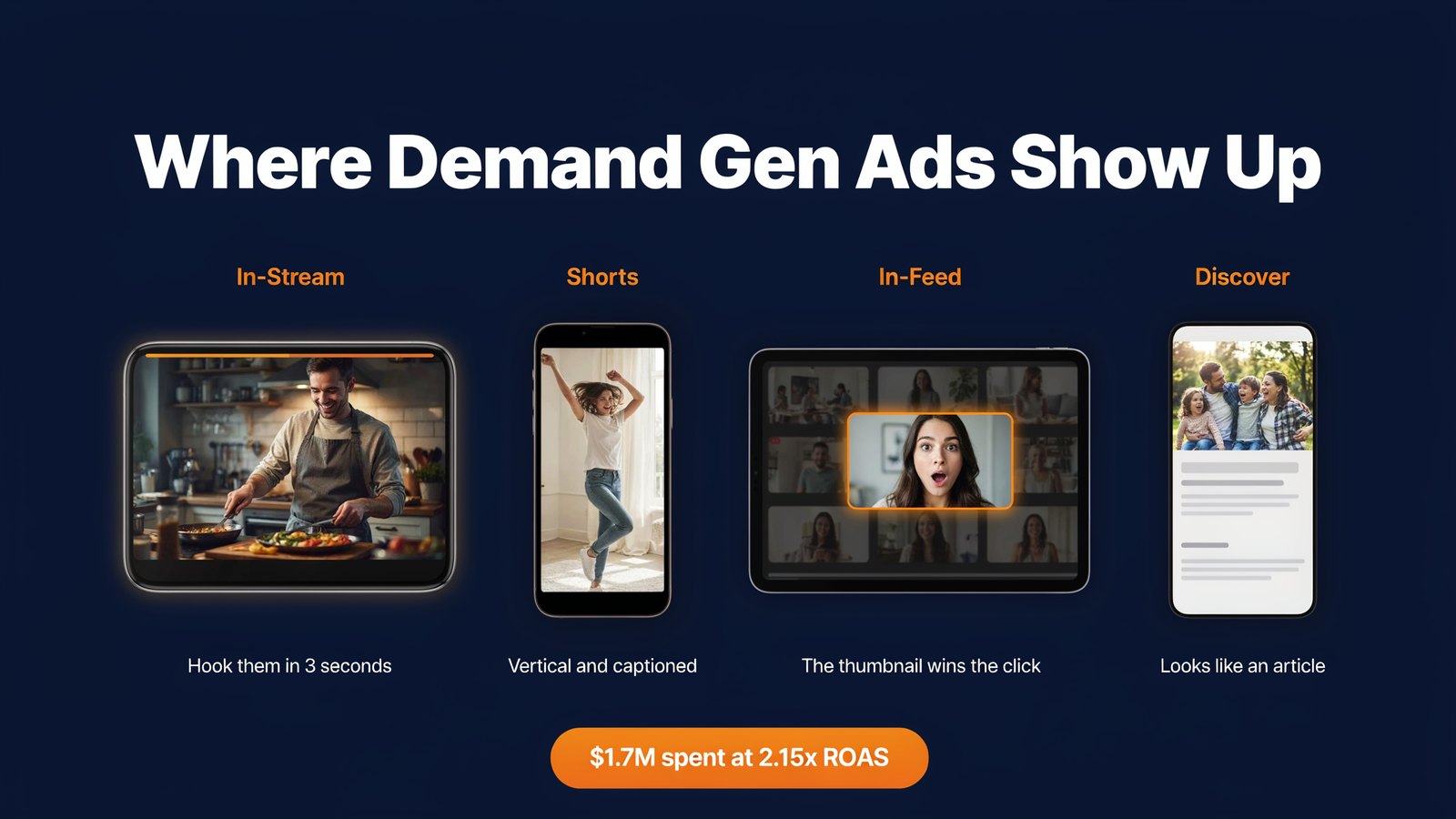
Demand Gen campaigns run your ads across YouTube in-stream, YouTube Shorts, the YouTube feed and Google Discover. Google kept improving them through 2025 and 2026, and the results show it.
Jackson says one of his clients has spent $1.7 million on Demand Gen this year at a 2.15x return, all from cold traffic. That's the kind of scale people used to expect only from Meta.
The good news? The videos and images you already run on Meta or TikTok can often be reused here. You just have to adjust them for each format.
- In-stream ads play before or during a YouTube video. Viewers can skip after 5 seconds, so name their problem in the first 3.
- Shorts ads are vertical and fast. Hook people in the first second and add captions, because many watch without sound.
- In-feed ads are a thumbnail and a headline. Your thumbnail has to win the click on its own.
- Discover ads sit in Google's news and article feed. Ads that look and read like an article tend to fit in best.
Notice the pattern?
With in-feed and Discover, the ad does very little selling. The page does the heavy lifting after the click.
What to do about it
Cold traffic is impatient. If the page is slow, broken or doesn't match the ad, they're gone. Make your landing pages fast, focused and consistent with the ad that sent people there.
4. AI Overviews and AI Mode Are Taking Over the Results Page
Search a question on Google today and the first thing you often see isn't a link. It's an AI Overview, an AI-written answer that can fill half the screen.
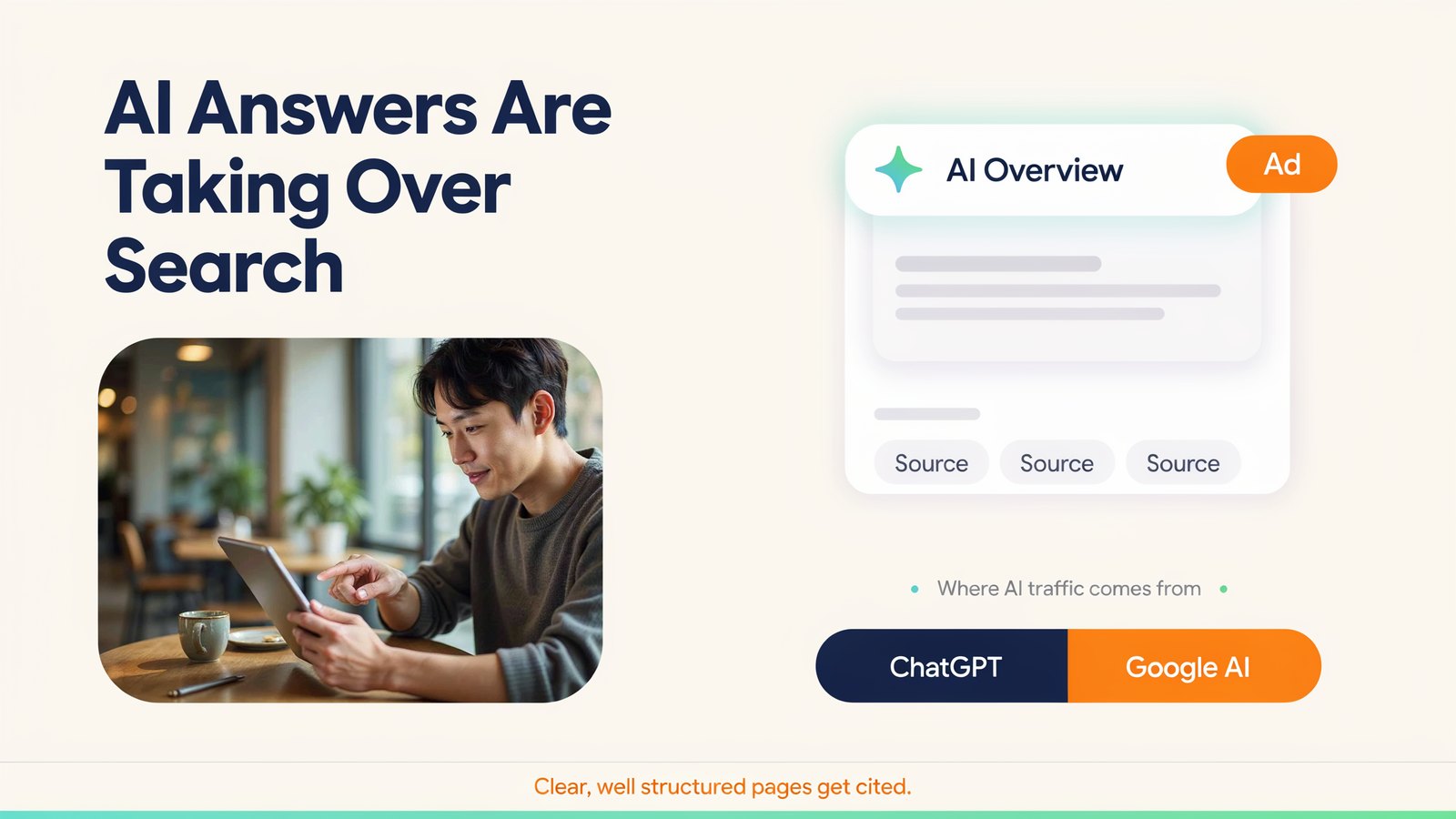
Then there's AI Mode, a separate AI search experience where people ask a question and keep asking follow-ups.
Here's the part that surprised me.
According to Jackson's partners, ChatGPT used to send them most of their AI-driven traffic. Now it's close to an even split with Google's AI Overview and AI Mode.
That makes sense when you think about it. Google doesn't need to teach anyone a new habit. Billions of people already search there. Google just added AI on top.
And Google is now showing ads in and around these AI answers too.
We're still early. Nobody knows exactly how much revenue these placements will drive. But I'm confident they'll become a serious channel.
What to do about it
AI answers are built from web pages that are easy to read, easy to crawl and clear about what they cover. The same things that help you rank help you get pulled into AI answers.
So the basics matter more than ever. Clean structure. Clear headings. Accurate titles and descriptions. Structured data. No crawl errors hiding your best pages.
The Common Thread Is Your Landing Page
Look back at all four shifts.
- Search picks pages from your site and matches them to intent.
- Shopping wants you to test new images and new pages.
- Demand Gen sends cold traffic that needs the page to sell.
- AI answers pull from pages that are clean and easy to understand.
Google is handing more of the targeting to AI. What's left for you to control is the message and the page.
That means your website has gone from "the thing the ad links to" to the thing that decides whether the ad works.
Here's a simple check I'd run on every page before it gets a single ad dollar.
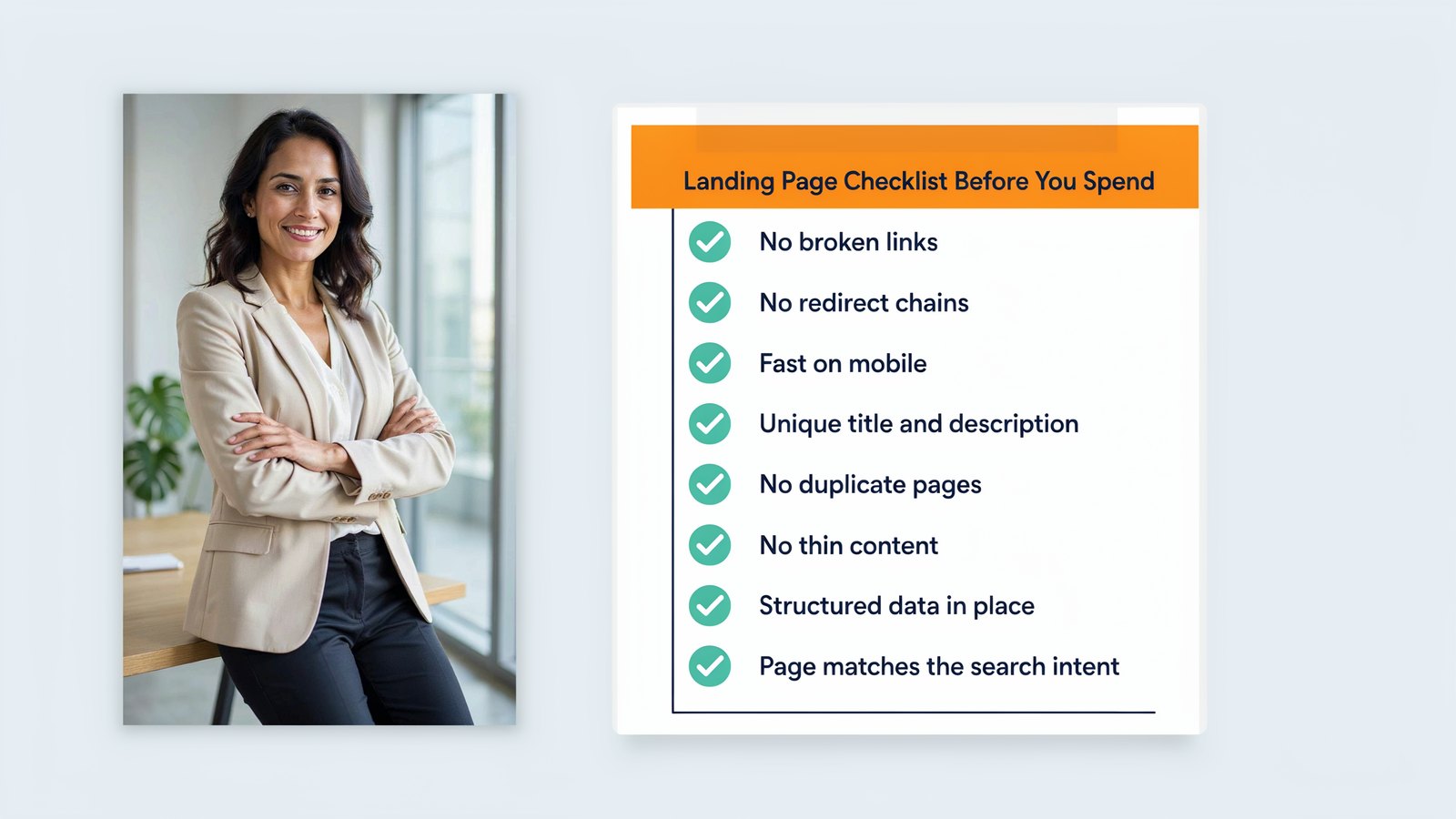
- No broken links or images. A 404 on a paid click is money set on fire.
- No redirect chains. Every extra hop slows the page and can break tracking.
- Fast on mobile. Most of this traffic is on phones.
- A clear, unique title and description. Google uses them to understand what the page is for.
- No duplicate pages competing for the same search.
- No thin pages. A cold buyer needs real answers.
- Structured data in place, so Google reads your products, reviews and FAQs correctly.
- The page matches the intent of the search or ad that sends people there.
How Tarantula Helps You Get Your Pages Ready
This is exactly the kind of work Tarantula was built for.
Tarantula is our AI-powered SEO spider. It crawls your site the way Google does and shows you every problem that stops a page from performing.
- Finds broken links and redirect problems, including chains and loops, before your ad traffic hits them.
- Checks titles and meta descriptions for pages that are missing, duplicated, too long or too short.
- Flags duplicate and thin content, so you know which pages need work.
- Pulls page speed and performance data from Google's APIs, page by page.
- Checks structured data, Open Graph tags and pixels, so Google and social platforms read your pages properly.
- Uses AI to show the real keywords a page targets, so you can see whether it actually matches the intent you're paying for.
- Crawls competitor sites too, so you can see how the brands winning these searches structure their pages.
And if a page needs fixing, you can rewrite it with the AI built into Tarantula.
The price is the part people don't believe.
Tarantula costs $6.99 a month, or $47 for a whole year. That's less than a few wasted clicks on a competitive keyword.
If you're about to spend real money on Google Ads, run your landing pages through Tarantula first. It's the cheapest insurance you'll ever buy.
Frequently Asked Questions
What is AI Max for Search?
AI Max is a set of features for Google Search campaigns. It uses AI to find relevant searches beyond your keyword list, and it can adapt your ad text and choose a landing page from your site based on what someone searched.
Is Demand Gen better than Meta ads?
Not always. Meta is still a great place to find new customers. But Demand Gen has become a strong second channel, and the same creative ideas can often work on both with some changes for each format.
Do AI Overviews hurt my website traffic?
They can take clicks away from ordinary results, because people get an answer right on the page. But AI Overviews also link to their sources. Clear, well-structured pages give you the best chance of being one of them.
Why does SEO matter if I only run paid ads?
Because Google uses the same signals to understand your pages either way. A page that's slow, broken or unclear hurts your organic rankings and your ad results. Fixing it helps both.
Final Thoughts
Google Ads isn't getting harder. It's getting different.
The targeting is moving to AI. The placements are multiplying. And the page people land on has become the deciding factor.
The brands that win won't just have better ads. They'll have better pages, built for each kind of buyer and checked before the money goes in.
Start with an audit. Fix what's broken. Then go after these new opportunities with pages that are ready for them.
Thanks to Jackson Blackledge for the original post that sparked this one.